Emergency Water Damage Restoration for Bisbee Homes: Burst Pipes, Monsoon Flooding, Sewage and Mold
Water damage is a race. Standing water soaks into drywall and wood within hours, and mold can start to grow within a day or two on wet material that stays damp. The first job is to stop the source, and the second is to get the water out and the structure drying before the damage spreads.
This page covers the first hour, extraction and drying, burst pipes, flooded rooms, sewage backups, mold testing and removal, fire and smoke, and the records worth keeping for an insurance claim. In Bisbee the cause is often a pipe, a roof, or monsoon runoff. Ring the dispatch number and the call goes to a network plumber.
Dispatch answers 24/7. Plumbers from our network serve Bisbee and the outlying areas.
Do this first Find and close the main water shut-off. Turn off power to wet areas at the breaker only if you can reach the panel without standing in water. Stay out of rooms with standing water near outlets. If sewage is involved, keep children and pets away and do not run water.
The first hour: stop the source and stay safe
- Close the main shut-off, or the fixture valve if the leak is at one fixture.
- Switch off power to the wet area from a dry spot, or leave it and call if you cannot do so safely.
- Photograph and film the damage before moving anything.
- Lift small items, furniture legs and curtains out of the water.
- Open windows if the weather allows and run fans; leave heavy equipment to the crew.
- Call, and describe where the water came from and how far it spread.
A plumber stops the source and repairs the line. Drying out the structure is the second step, and the crew or plumber will tell you plainly which parts of the job they handle and which need another trade.
Water extraction and removal
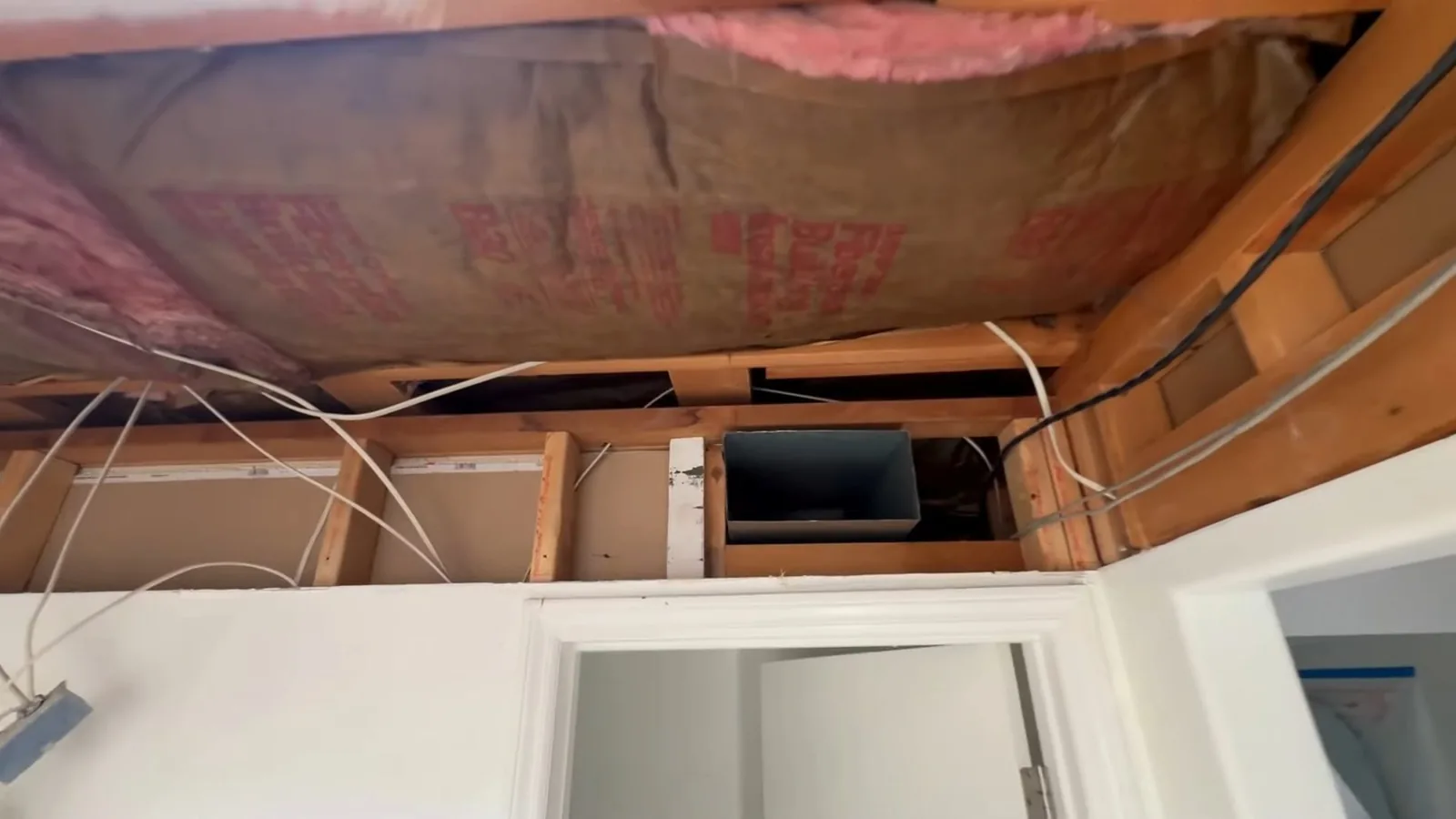
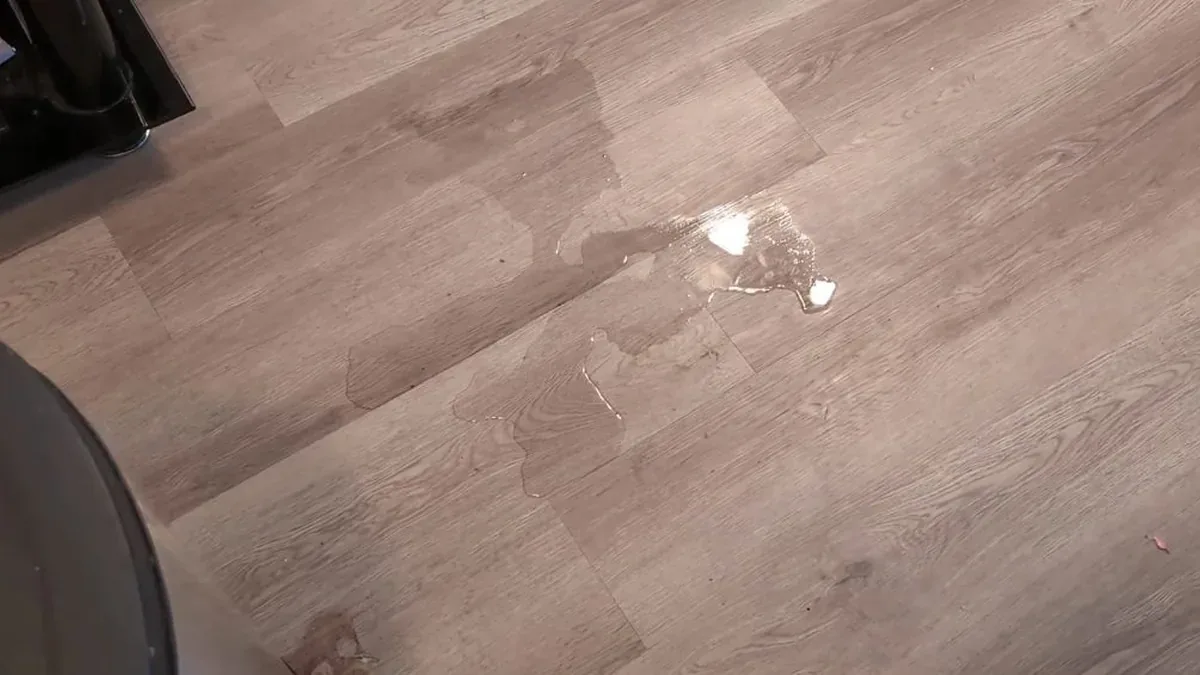
Extraction takes out the bulk water with pumps and wet vacuums before drying begins. Removing standing water is the fastest way to limit what soaks into subfloor, baseboards and drywall. The crew checks where water went, including under cabinets, behind baseboards and into wall cavities, and not only where it is visible.
Drying equipment: air movers and dehumidifiers
Drying is a process, not a single pass. Air movers push air across wet surfaces, dehumidifiers pull moisture out of the air, and moisture meters show whether wood and drywall are actually drying. A room that feels dry can still hold moisture in the wall, so the crew returns to read the meters until the readings reach normal levels.
| Equipment | Job | How you know it is working |
|---|---|---|
| Air movers | Move air across wet floors and walls | Surfaces dry faster; fans run on a set schedule |
| Dehumidifiers | Remove moisture from the air | Humidity readings drop; the unit collects water |
| Moisture meters | Read moisture inside wood and drywall | Readings fall toward the dry standard for the material |
| Wet vacuums and pumps | Remove standing water | Water level falls; floors can be cleared |
Water is spreading and you need it stopped? Call and tell the dispatcher where the source is.
Call (520) 386-1957Burst pipe and plumbing leak damage
A burst pipe floods fast, and a slow leak soaks for weeks. Either way the plumber finds the failed section, repairs it and tests the line before the drying begins, because drying a room while a pipe still leaks only repeats the damage. If the line is old and failing, the guide to repairing and replacing failing supply pipe explains the options.
Flooded rooms, lower levels and crawl spaces
Water from a failed line, a washing machine or a backed-up drain can flood a bathroom, a garage, a room, a lower level or a crawl space if the home has one. Water that sits in a closed crawl space keeps humidity high and feeds mold. If the home has a basement or lower level, mention it on the call so the crew brings the right pumps. The crew removes the water, dries the cavity and checks for damage to insulation, ducts and framing that lie out of sight.
Storm and monsoon flooding in Old Bisbee
Storm water is a different loss from a burst pipe. It can carry mud and debris, enter at doors and low windows and overload drains. Insurance and cleanup differ too, so describe the cause plainly on the call. A plumber can check drains, valves and backwater protection afterward.
Why flooding is a Bisbee issue
Hazard planning documents say the underground Mule Gulch channel along Main Street cannot carry a 100-year storm. On August 5, 2026, a monsoon storm flooded Old Bisbee streets and the Brewery Avenue historic district, and crews diverted water and sediment to an inactive mine at Brewery Gulch. The reports did not describe a sewer or water system failure from that storm.
Sewage backup cleanup
Sewage is a health hazard, not just a mess. Keep people and pets out, do not run water, and do not try to clean it with household tools. The plumber first finds where the blockage sits and clears or repairs it, then the affected area is cleaned and treated, and porous materials that soaked up sewage are removed. The guide to backups, camera inspection and sewer repair explains the plumbing side and who owns which section of the line.
Sewage backup cleanup is a different job from a plumbing repair. Expect the plumber to say which part is the repair and which part needs a cleanup crew with protective equipment.
Flooring, carpet and drywall damage
Carpet and pad that stay wet can sometimes be dried in place if the water was clean and the response was fast. Water from sewage or a dirty source means removal. Hardwood cups and buckles as it dries, and drywall that has soaked through usually has to be cut out. The crew decides material by material, using the meters and the type of water, and tells you what stays and what goes.
Damage assessment and larger losses
An assessment records the cause, the areas affected, moisture readings and photographs. For a larger loss it includes a plan for drying, removal and repair, and a note of what is outside the plumber's trade. Request the assessment as a written document, a record that your insurer and for any contractor who rebuilds.
What happens on a job
- The dispatch line takes your call and sends it to a plumber in our network.
- The plumber stops the source and makes the area safe.
- Standing water is extracted and wet materials are assessed.
- Drying equipment is set and readings are logged.
- Damaged materials are removed where drying will not work.
- The plumber repairs the failed plumbing and tests it.
- Final readings confirm the structure is dry before anything is closed up.
Mold testing, inspection and assessment
Mold needs moisture, and a leak left damp for a day or two can start it. Testing means sampling air or surfaces and sending samples to a lab, and an inspection looks for hidden moisture and growth. The EPA says there is no federal certification for people who test or clean up mold, and the Arizona Department of Health Services mold sheet names no state license for it.
Who can test or remove mold
The EPA advises that a testing or cleanup company be checked for experience and references, since there is no federal certification program. The research for this site found no Arizona state license for mold assessors or remediators. Ask for references, a written scope and what a clearance test would include, before work starts.
Mold remediation and removal
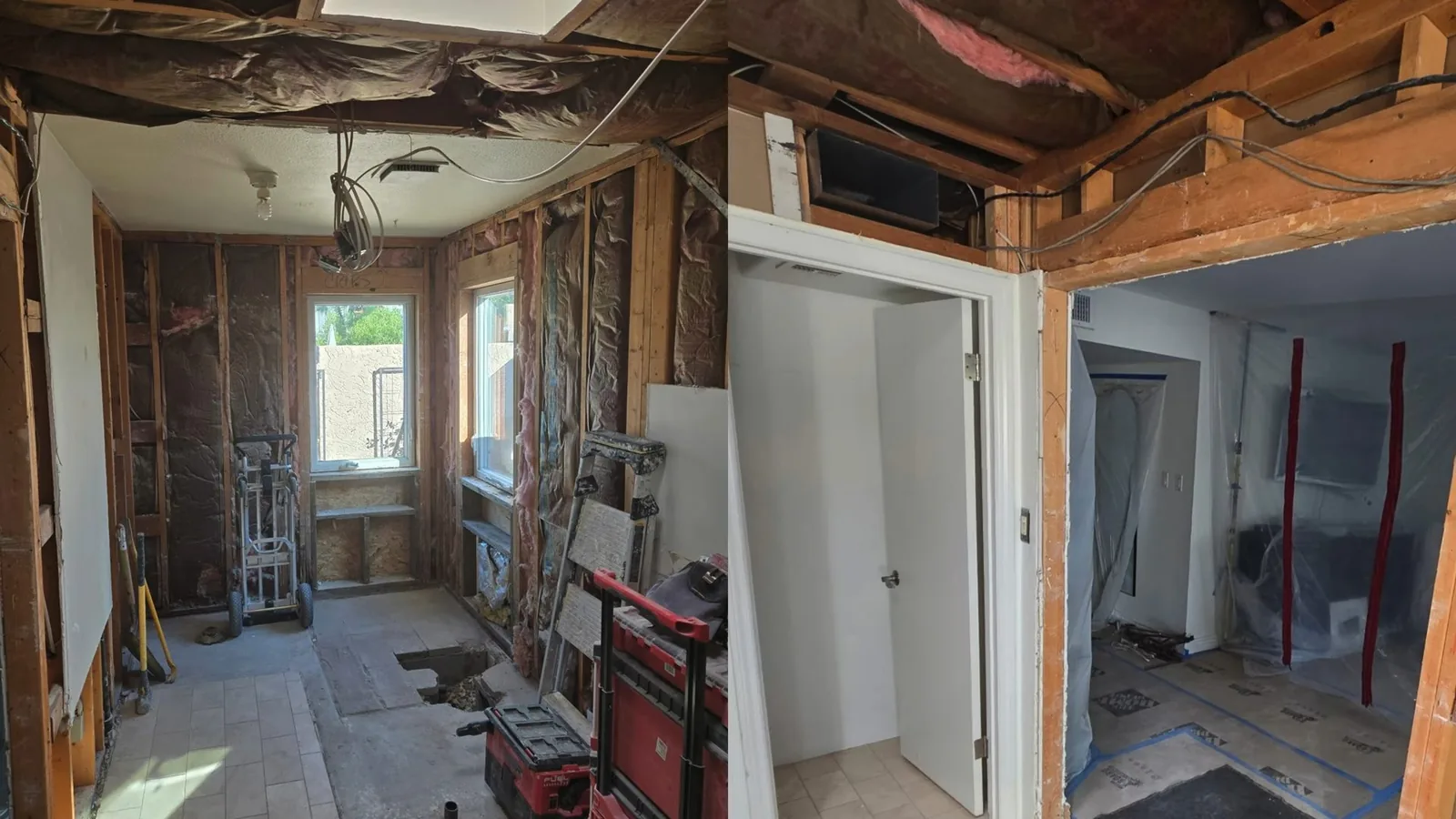
Removal starts by fixing the moisture, because mold returns where water stays. Small areas on hard surfaces can be cleaned. Porous materials such as wet drywall, insulation and carpet are usually removed and bagged. Containment keeps spores from spreading while the work is done, and the area is dried, cleaned and checked afterward.
Fire, smoke and odor damage
After a fire the first call goes to the fire department, and the building is not entered until it is cleared. The plumbers in our network handle the water side of a fire loss: broken or melted supply lines, damaged fixtures and the water left by hoses. Soot removal, structural smoke cleaning and odor treatment are specialty work, and a plumber will say so instead of promising it. For a leak that follows a fire, call and describe what the crews found.
Leaks that are not plumbing: roof, ceiling, air conditioner and irrigation
A stain on a ceiling can come from the roof, a condensate line or an irrigation leak outside, not from a pipe. A plumber can rule out the plumbing, and if the water is from a roof or an air conditioner, the right trade repairs the source. Drying and cleanup still apply once the source is stopped.
Waterproofing and foundation questions
If water enters at the foundation, check the grading, the gutters and downspouts first. Basement waterproofing, drainage and foundation inspection are a different trade from plumbing, and the plumber will tell you if the water is from groundwater instead of a pipe. Ask about backwater protection on drains if flooding has reached your drains before.
Insurance records and documentation
- Photographs and video of the damage before and during cleanup
- The date and time the water was found and when it was stopped
- A written description of the cause and the repair
- Moisture readings and drying logs from the crew
- Receipts for repairs, equipment and temporary housing
- Damaged items listed with age and value, kept until the insurer has seen them
This is a record-keeping list. It is not claims advice, and your insurer decides what is covered. Read your policy or call your agent before you discard anything.
Condos, rentals and commercial properties
In an attached unit, water often comes from a neighbor or a shared line. Tell the dispatcher whether the property is a condo, apartment or business so the right contact is reached. Wastewater questions in shared buildings can involve the city. The City Wastewater Division, listed on its page, is the contact for city lines.
Where the city line ends
Per the City of Bisbee Wastewater Division page, the city handles its sewer mains, and the code makes the owner responsible for the private line. When the backup comes from the public main, the city is the contact; from the private line, a plumber.
Extraction, drying, mold and records: water damage questions
Do I need a mold test after a leak or a flood?
Not always. If wet material was dried quickly and nothing smells musty or shows growth, a test may not be needed. If a leak sat for days or you see or smell mold, a test or inspection can show what is present. Ask for references, since no Arizona license for mold work was found.
What does water extraction and drying involve?
The crew removes standing water, finds where it spread and sets air movers and dehumidifiers. Moisture meters track drying until the wood and drywall reach normal readings, which can take several days. Expect return visits for readings and a decision about what stays and what is removed.
Is sewage backup cleanup the same as a plumbing repair?
No. The plumber repairs or clears the line that backed up. Cleanup of the contaminated area, removal of soaked porous materials and treatment is a separate job that needs protective equipment. The plumber will tell you where the repair ends and the cleanup begins, and which crew handles each part.
What records should I keep for an insurance claim?
Keep photographs and video, the time you found the water and stopped it, a written cause, drying logs, receipts and a list of damaged items. This is a list of records, not claims advice. Your insurer decides coverage, so read the policy or call your agent before discarding anything.
Who handles water damage from a monsoon storm?
A plumber handles the plumbing side, such as drains, valves and backwater protection. Water that came through doors, windows or the roof is cleaned up and dried the same way, but the cause differs for insurance. Describe it plainly on the call so the right crew is sent.
Water in the house now?
Call the water damage line and tell the dispatcher where the water is coming from. The dispatcher routes it to a plumber for your address. If a pipe is the cause, see finding the leak.
Call (520) 386-1957