Emergency Sewer Line Repair for Bisbee Homes: Backups, Steep Old Mains and Who Owns What
Bisbee's oldest sewer mains date to the early twentieth century and were built of clay, transite and cast iron, and many run down grades steeper than 30 percent, according to the city's own planning document. That history shapes what happens when a house line backs up. The fault can be in your pipe, in the city main, or in the stretch between them, and the city code does not say who owns that stretch.
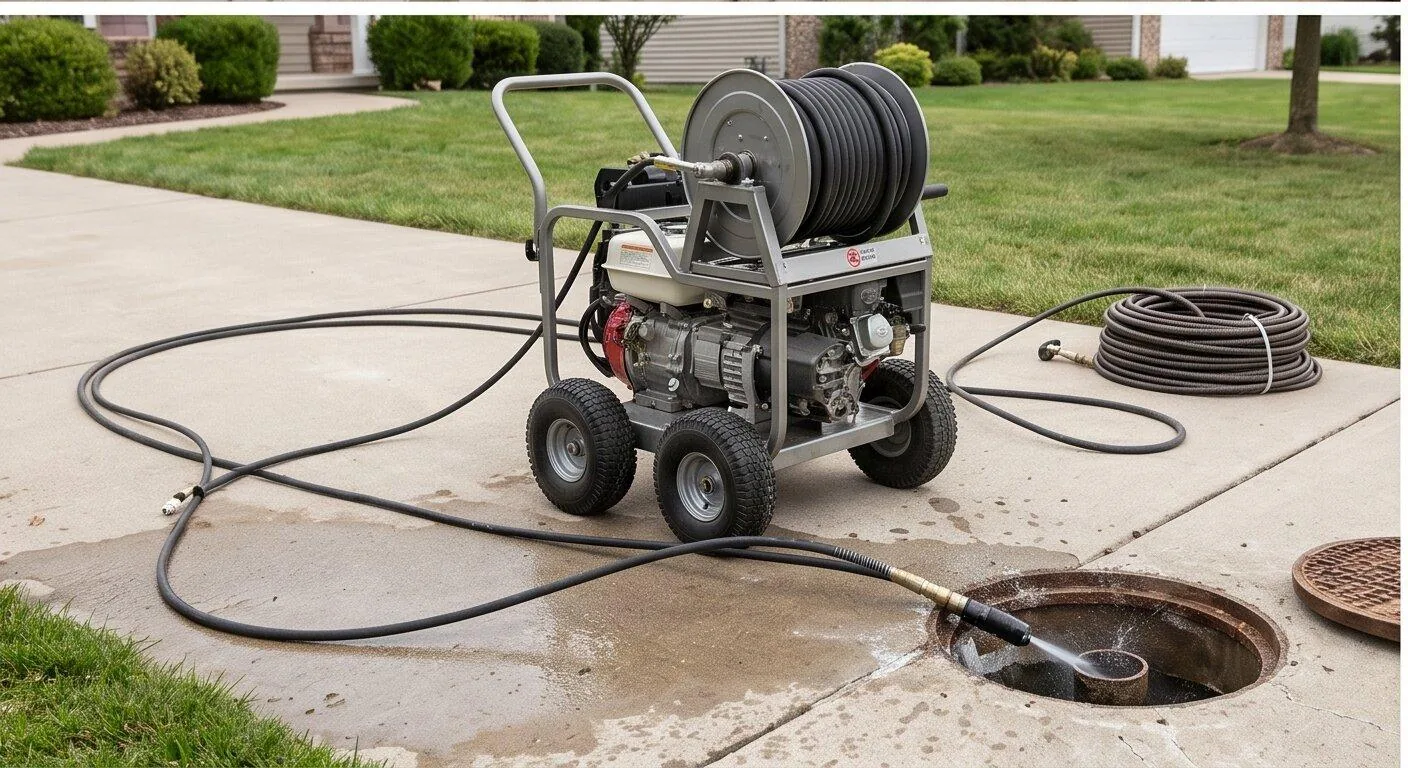
Below: who owns which part, what to do in the first minutes of a backup, what a camera inspection should tell you, and how a plumber chooses between cleaning, repair, lining and replacement. The dispatch line answers around the clock and passes the call to a plumber who covers your address.
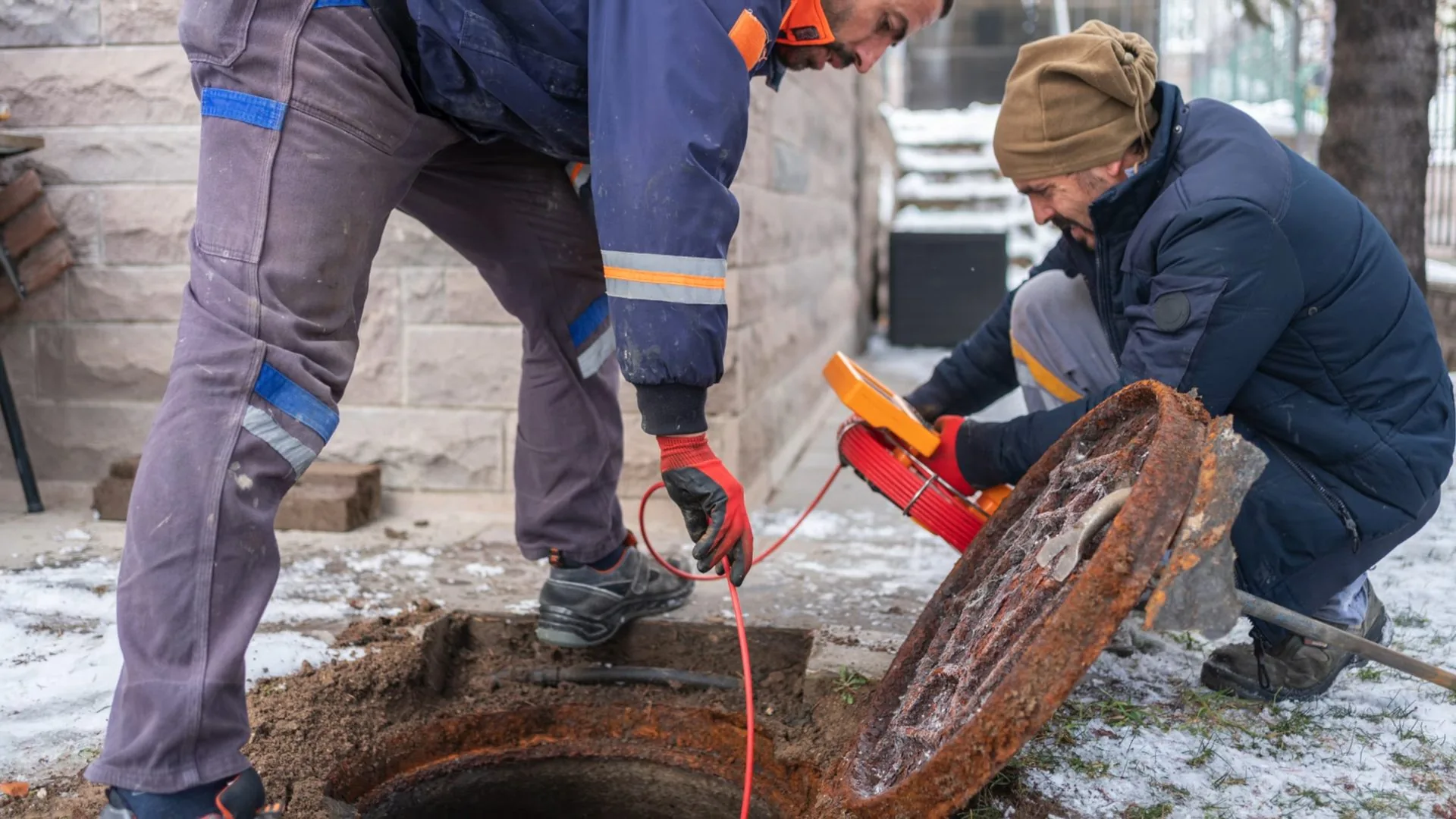
Dispatch answers 24/7. Plumbers from our network serve Bisbee and the outlying areas.
Who owns what: the house line, the main and the stretch between
Ownership decides who pays and who may dig, so settle it before any repair is authorized. The city code and the Wastewater Division give a partial answer.
| Part of the system | Who is responsible | Where it says so |
|---|---|---|
| The house sewer line, from the building to its connection | The property owner, at the owner's expense | City Code 13.4.2.B |
| The consumer's service line generally | Not the City; the code says it takes no responsibility for installing, maintaining or inspecting it | City Code 13.4.1.A |
| The sewer main and collection system | City of Bisbee Public Works, Wastewater Division, 520-432-6001 | Wastewater Division page |
| The stretch between the property line and the main | The code never states it in one sentence, so treat it as unclear | Ask Public Works before you dig or pay |
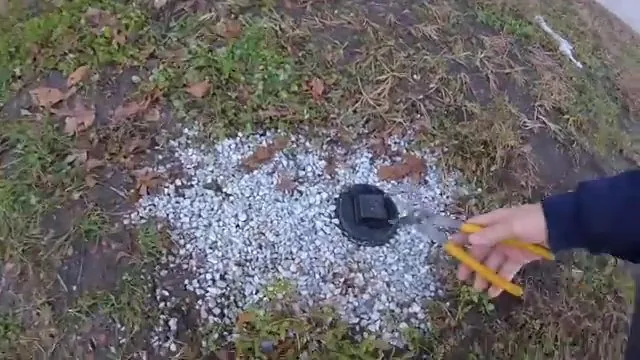
If a camera shows the break is out in the street, call Public Works before signing anything. If it is inside your property, a plumber repairs it and you pay. In between, the answer may depend on where the break sits, and a written reply from Public Works is worth having.
A CCTV sewer inspection means a small camera on a flexible cable, run through a cleanout while the plumber watches the picture. It shows cracks, offsets, roots and sags in the pipe.
A backup right now: what to do in the first ten minutes
- Stop using water: no flushing, no washer, no dishwasher, no showers.
- Keep people and pets out of any area where sewage has surfaced, and open windows if the smell is strong.
- Close the main water shut-off if water is flowing in, such as an overflowing toilet that will not stop.
- Call the dispatch line and say which fixtures are affected and where it rises first.
- Take photographs of what surfaced and where, for the plumber and for any insurance claim.
Ask the plumber whether a backwater valve is installed. Bisbee's adopted amendments make one mandatory at a sewer tie-in, and it is the part that keeps a surcharged main from pushing sewage back up into your lowest fixture.
Do not use chemical openers on a backup. They do not clear a main-line blockage, they sit in standing sewage, and they are a hazard to the person who opens the line next. Leave the line alone and call.
A backup is an emergency at any hour. Call and name the fixtures that are affected; the dispatcher tells you what to do while the call is routed.
Call (520) 340-7175Camera inspection: what it should show you
A camera on a cable runs through the line and records what the pipe looks like: its material, joints that have opened, roots, a belly where water pools, scale and breaks. It also measures how far along the line each problem sits. That distance is what turns a vague diagnosis into a repair that can be priced.
Ask for the recording and for the footage to be tied to a distance or a landmark. Two outcomes follow from it. If the line is sound, cleaning clears the blockage and the camera has told you it will hold. If not, the camera shows whether one section or the whole run needs work.
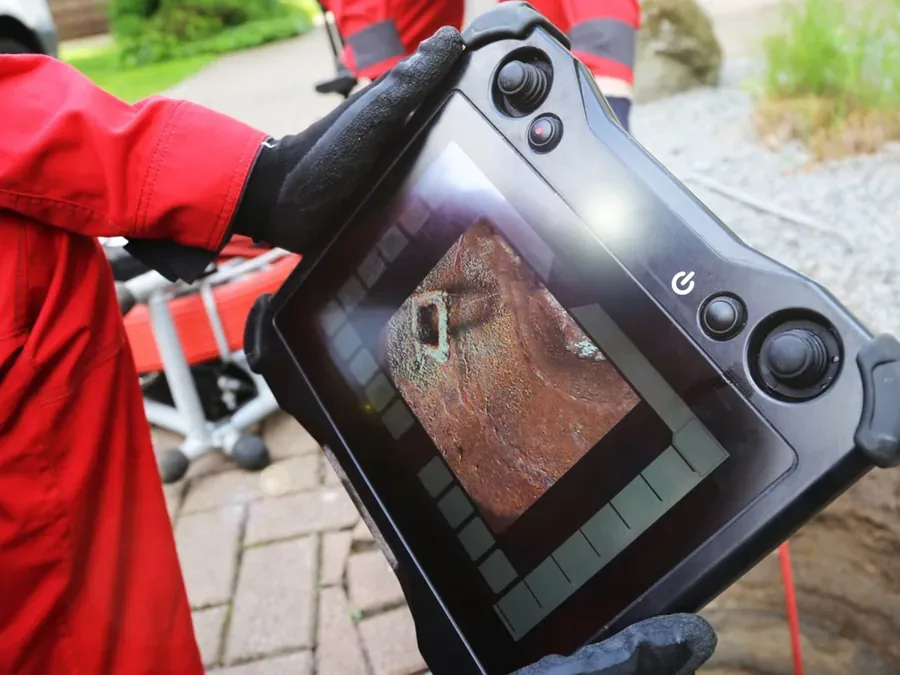
A cleanout makes the work easier
A cleanout is a capped opening in the line that gives a cable or camera a straight way in. Without one, the plumber may have to remove a toilet or open a trap, which takes longer. If the camera finds none, ask whether adding one is part of the repair.
Before a purchase or sale
Buyers and sellers of older houses often have a sewer line inspected before closing, because the line is hidden and the cost of a failure falls on whoever owns the house next. A recording gives both sides the same facts. It does not tell you who owns the stretch to the main, so ask that question separately.
Clean, repair, reline or replace
| Finding | Typical response | Why |
|---|---|---|
| Grease, paper or a soft root plug in sound pipe | Cable or jet cleaning | The pipe is intact; the blockage is the problem |
| One cracked or offset section | Cut out and replace that section, or line it | The rest of the run tests sound |
| Roots entering at several joints, or a long sagging stretch | Lining or replacement of the run | Cleaning only buys time; the fault repeats |
| Cast iron scaled through, clay collapsed, or fiber-based pipe breaking down | Replacement | The material is at the end of its life |
Pipe made from asbestos-cement, clay or cast iron was common in the era when Old Bisbee was built. Ask the plumber to name the material in your line, and to say whether it is the same on both sides of any repair.
Lining or digging: how the choice is made
Trenchless methods repair a line from the inside. In lining, a resin-soaked tube is pulled through the old pipe and cured to form a new one. In pipe bursting, a tool breaks the old pipe outward while a new one is pulled in behind it. Both need only small access pits, which matters on steep lots, under patios and next to historic walls. Open digging remains the answer where the pipe has collapsed, the grade has to change or a fitting must be replaced.
Bisbee adds its own constraints. The city's soils sit on caliche, a hard layer that slows any excavation, and the hazard plan describes old mine workings under much of the town. Both are reasons to ask what the plumber expects to find before a dig is planned.
Ground conditions to ask about
The Cochise County hazard mitigation plan says the town is honeycombed with old mine shafts and tunnels and that subsidence could occur in most of Bisbee. A repair that digs near an old workings or a failing channel wall should be planned with that in mind, and the General Plan describes shallow soils over caliche.
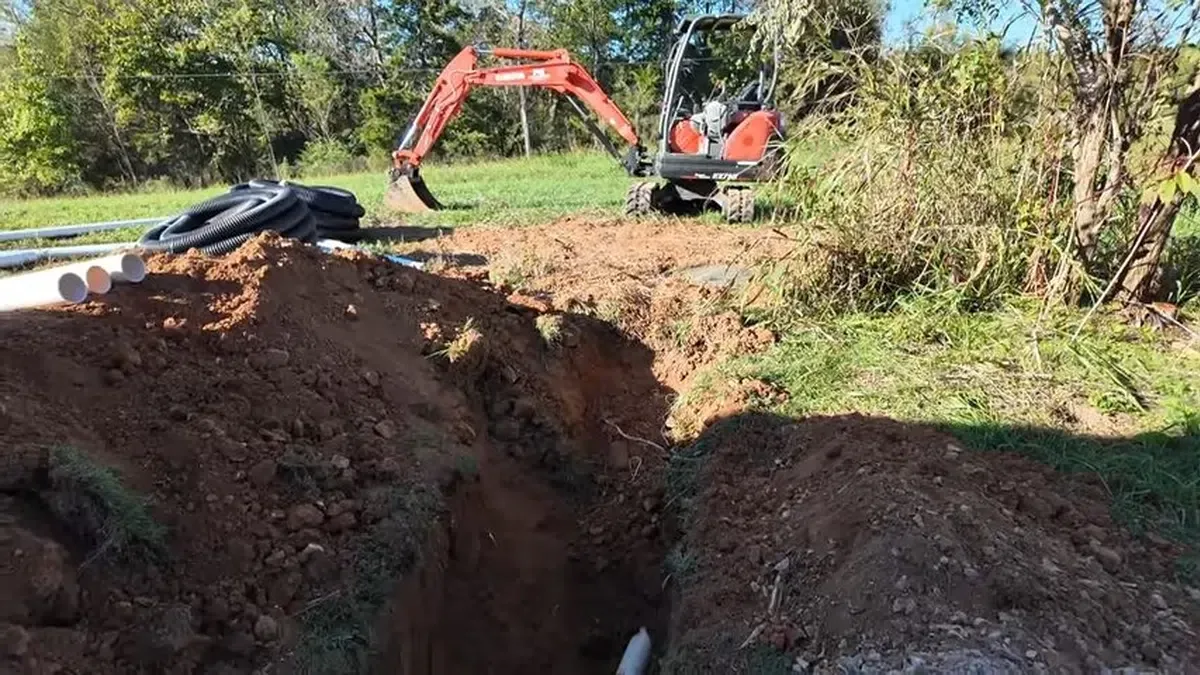
Permits, Arizona 811 and the street
- A written city permit is required to open, connect to or alter the public sewer, under City Code 13.4.7.A.
- Digging in a street, alley or right-of-way needs a city excavation permit under City Code 7.12.2.
- Arizona 811 must be called before any dig, homeowners included; locators have two full working days to mark lines.
The plumber normally pulls the permits and calls 811. What you can do is ask, early, which permits apply and who is responsible for each. A dig that starts before the marking arrives is a dig that can hit a gas line.
Sewer smell and a trap that will not hold water
A faint sewer smell is often a dry trap. A trap that loses its water repeatedly, though, suggests a venting problem or a siphoning line, and a smell with gurgling suggests the line is partly blocked. When the smell comes with slow drains, ask for the camera look before more cleaning.
Septic is a different system
Some outlying parcels are not on the public sewer, and septic systems are regulated by Cochise County Environmental Health at 520-586-8206. This page and the dispatch line cover sewer lines; septic service is not offered, so a septic question belongs with the county.
Sewer line questions: backups, lining, smells and sales
What is sewer drain cleaning, and when is it the right answer?
It is a cable or water jet run through the main line to clear a blockage. It is the right answer when a camera or the symptoms show a soft plug, such as grease, paper or a few roots, in pipe that is otherwise sound. If the same line backs up again within weeks, cleaning alone is not enough and the line needs inspecting.
Can a sewer line be replaced without digging up my yard?
Sometimes. Lining and pipe bursting work from small access pits and avoid a long trench. They do not suit every line: a collapsed pipe, a change in grade or a heavily offset joint may need an open dig. A camera inspection tells the plumber which method the line can accept, and Bisbee's rocky ground makes the question worth asking early.
Who do I call for a sewer backup?
Call a plumber first, because the cause may be your own line, and the dispatch line answers around the clock. If a camera shows the blockage is in the city main, Public Works handles it at 520-432-6001. While you wait, run no more water, keep children and pets clear of sewage and photograph what surfaced.
Why does my bathroom smell like sewage and the trap keep losing water?
A dry trap is the simple cause. If it repeats, a blocked vent or a partly blocked drain may be pulling the water out. A camera look at the line and a check of the vent can find the cause. Do not pour chemicals down the drain; they will not fix a venting problem and may harm the plumber who follows.
Should I have the sewer line inspected before buying a house?
In an older house, a camera inspection before closing is a reasonable step, because the line is hidden and a failure falls on the next owner. Ask for the recording and for the material to be identified, and ask Public Works about the stretch between the property line and the main, which the code leaves unclear.
Is lining or replacement the better choice?
It depends on what the camera finds. Lining suits a line that is structurally sound but rough, cracked or leaking at joints. Replacement suits a line that is collapsed, deeply offset or made of a material at the end of its life. Ask the plumber to show the footage that supports the choice, and to compare the two in writing.
Sewage backing up?
Call the dispatch line and say where it is surfacing. The call goes to a plumber serving your area. For the clogs that are not a main-line problem, see clearing a clogged drain.
Call (520) 340-7175